
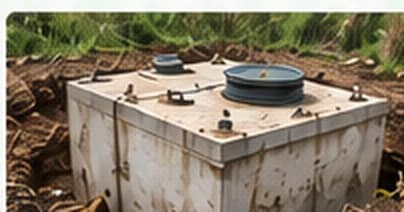
Septic Tank
A damaged or deteriorated tank may be replaceable on its own—or may signal that more of the system needs attention.
Learn More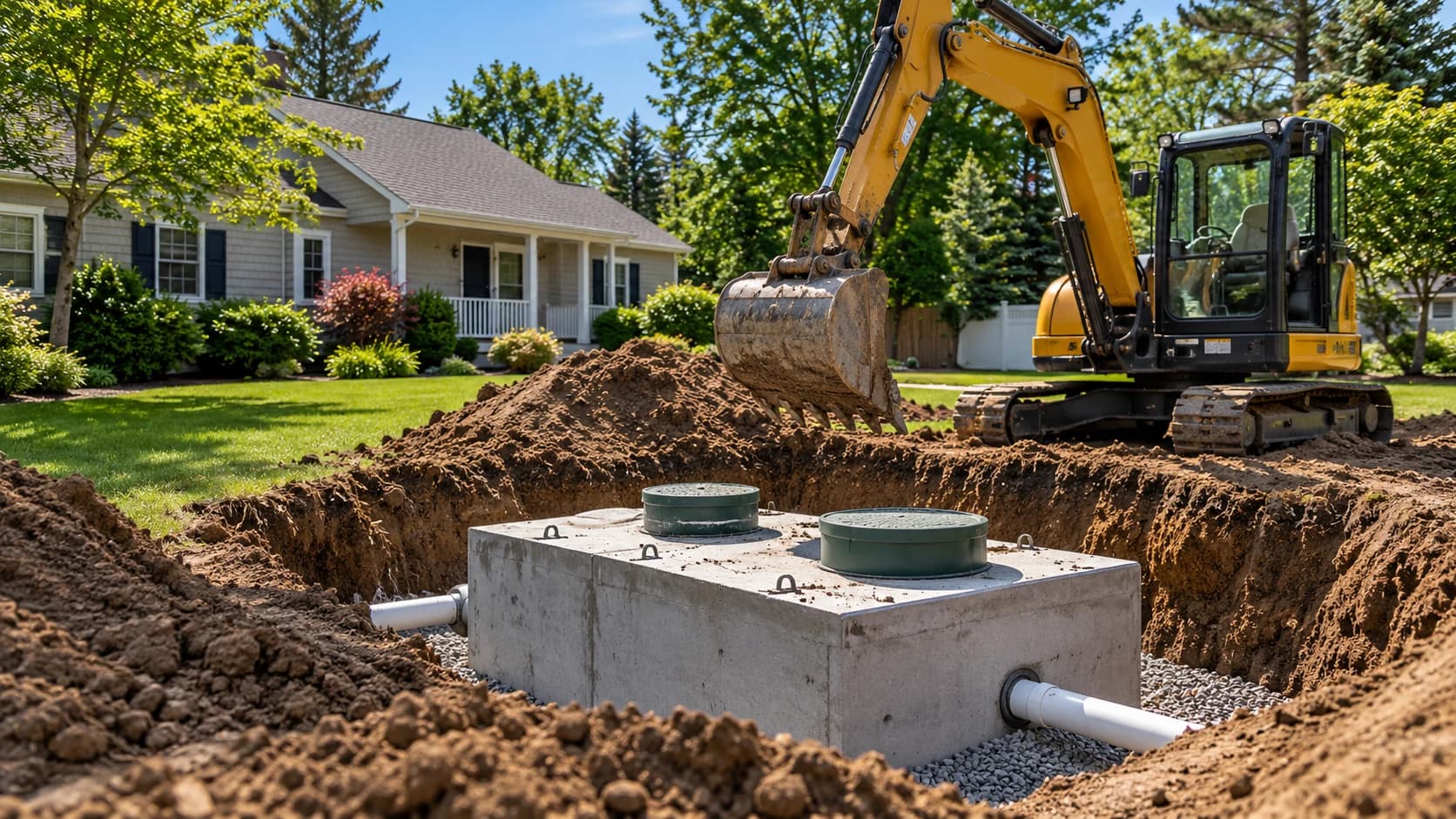
When a septic system is failing, identify the failed component before pricing a new system.
A tank, a distribution box, an absorption area, and a cesspool can produce similar symptoms and require different work.
A septic replacement can involve one failed component or several parts of the system. If the tank has failed but the absorption area can still accept wastewater, replacing the tank does not automatically mean rebuilding the field. The tank and absorption area have to be assessed separately.
Backups, sewage odors, or wet ground do not identify the failed component by themselves. The problem may be in the tank, distribution box, piping, absorption area, or more than one part of the system.
Determining what failed comes before deciding how much must be replaced. A tank problem is not the same decision as a failed drain field—and neither should be assumed from symptoms alone.
For component-by-component comparison, see repair versus replacement and tank versus drain-field failure.
These situations can indicate a septic problem that deserves evaluation. They may point toward repair, partial replacement, or full replacement—or toward a different issue entirely.
A symptom can suggest a problem. It does not, by itself, prove that a new system is required.
The failed component changes whether the job is a repair, a tank replacement, a new drain field, or a new system.
A damaged or deteriorated tank may be replaceable on its own—or may signal that more of the system needs attention.
Learn More
Drain-field failure can drive a larger replacement decision, especially when soil saturation or surfacing wastewater is present.
Learn More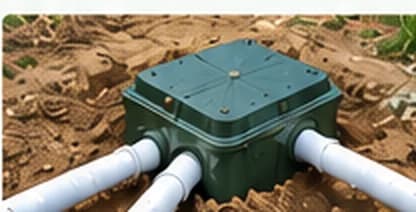
Problems in the distribution box, piping, or related components may be limited—or may point to broader system issues.
Learn More
When multiple parts have failed, or site conditions leave little room for a partial fix, full replacement may need evaluation.
Learn MoreRepair is possible when the failed component can be corrected and the remaining system can still function under applicable requirements.
Repairability depends on:
This is not engineering advice, and it is not a determination that a repair is permitted or sufficient for any specific property.
Major septic replacement work generally follows evaluation, design, and approval before construction. Exact requirements vary by property and project.
Name the failing part: tank, distribution, absorption area, or cesspool.
A property-specific look at existing components, site constraints, and conditions that affect options.
Soil evaluation may be needed so a design can account for how the site can treat wastewater.
In Suffolk County, major septic work commonly involves a design that meets current Town and County requirements. Exact steps depend on the property.
Suffolk County and Town of Brookhaven review can apply. Requirements can depend on the property, location, project, and current rules, including nitrogen-related standards where they apply.
Work proceeds according to the approved design and applicable construction requirements.
Where required, inspection may occur before components are covered.
Final steps depend on the approved plan, inspections, and site conditions.
Qualifying Suffolk County homeowners replacing an existing cesspool or septic system with an approved I/A OWTS may currently be eligible for up to $45,000 in combined County and New York State grants, subject to current program requirements. That figure is a published maximum, not a payment every project receives.
Qualifying homeowners replacing a cesspool or septic system with an approved I/A OWTS may currently be eligible for up to $45,000 in combined County and New York State grants.
Learn MoreSuffolk County’s current septic grants are written for approved nitrogen-reducing I/A OWTS replacements. Not every existing system is required to use that technology.
Learn MoreSuffolk County prohibits replacing an existing cesspool with another cesspool. A grant-funded replacement uses an approved I/A OWTS.
Learn MoreIn Suffolk County, some projects involve innovative and alternative onsite wastewater treatment systems, often called I/A OWTS. Whether that applies depends on the property, location, project, and current Town or County rules.
The property, the project, and current rules decide it. I/A OWTS and nitrogen-reducing systems.
A failed septic inspection—especially during a property transaction—raises practical questions: what failed, how severe it is, whether repair is realistic, whether replacement is needed, what design and approvals may follow, whether an I/A OWTS grant applies, and how timing may affect a sale.
This is not legal advice about buyer or seller responsibility. Read about failed septic inspection.
The Town of Brookhaven covers a much larger area than the Brookhaven hamlet, including Coram, Centereach, Selden, Farmingville, Medford, Middle Island, East Patchogue, and Port Jefferson Station. Sewer status, site conditions, and the system in the ground still vary by property.
Cesspools, conventional septic systems, and nitrogen-reducing systems can all come up. See the Town of Brookhaven service area.
Not always. A broken baffle, a collapsed distribution box, a saturated absorption area, and a cesspool that no longer disperses wastewater are different jobs. Limited repair is realistic only when the rest of the system can still accept and treat wastewater.
Sometimes. It depends on which component failed, the condition of the rest of the system, site and soil conditions, design requirements, and whether a repair can adequately address the problem under applicable approvals. That decision is property-specific.
Backups, odors, and wet ground can come from the tank outlet, the distribution box, or the absorption area. Liquid level at the outlet, the condition of the baffles, and whether sewage is surfacing over the field separate those causes.
Read the report for the component that failed. A repairable baffle or distribution box is not the same finding as a failed absorption area or a cesspool that has to be taken out of service.
Major septic work in the Town of Brookhaven often involves a design prepared to meet current Suffolk County and Town requirements. Exact professional and approval steps depend on the project.
Qualifying Suffolk County homeowners replacing an existing cesspool or septic system with an approved I/A OWTS may currently be eligible for up to $45,000 in combined County and New York State grants. Apply and receive the grant before installation. Agencies decide eligibility.
Timing varies. Evaluation, design, approvals, site conditions, contractor scheduling, and project scope all affect the calendar. There is no single fixed duration that fits every property.
Start by identifying the problem and understanding your options.