
Possible field issue
- Persistent wet area over the known field
- Surfacing wastewater
- Odors in the yard after the tank was recently serviced
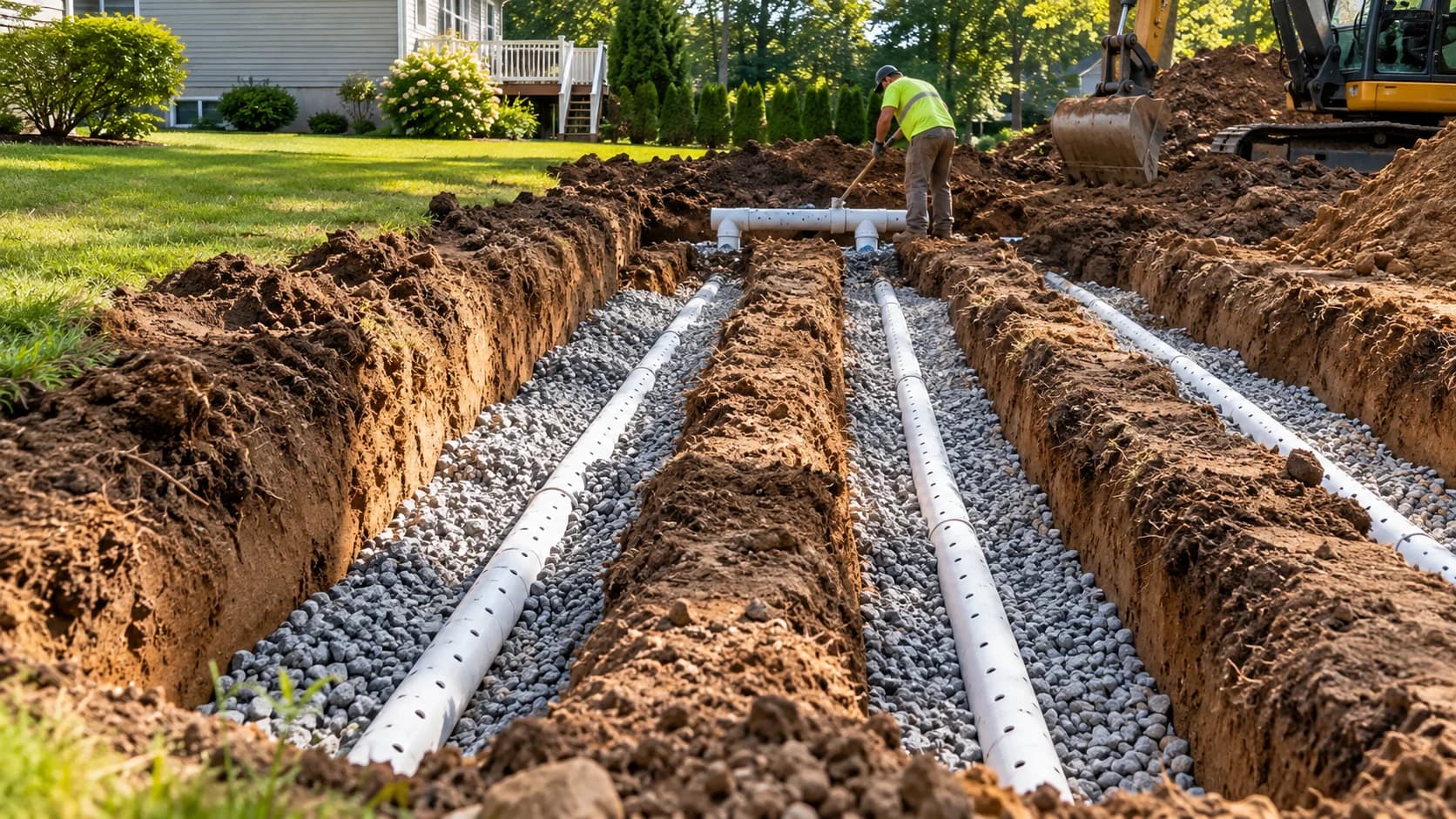
Leach field, drain field, and absorption area are common names for the soil-dispersal portion of a conventional septic system.
Liquid leaving the tank is distributed into that soil. When the soil stops accepting it, wastewater can surface, smell, or back up into the house.
A leach field, also called a drain field, is where liquid leaving the tank is distributed into the soil. When that area stops accepting wastewater, the problem can show up as wet ground, odors, or backups.
A wet area does not by itself prove the drain field has failed. A distribution problem, heavy use, a high water table on that lot, or a tank issue can produce overlapping signs.
Field replacement is a major project. It should follow an evaluation of the tank, the distribution components, and the soil area, not a guess from the yard.
Use the decision guide when you are not sure which part is involved. Tank vs. drain field.
If the tank and the absorption area both have to be renewed, the work is a system replacement rather than a field-only job. Septic system replacement.
Some distribution problems can be repaired without rebuilding the field. That has to be confirmed on site. Septic repair.
Yes. Both names refer to the absorption area of a conventional septic system. A cesspool is not a leach field.
Not by itself. A wet area does not prove the drain field has failed. Standing water can also come from surface drainage, groundwater, or another source. The tank, distribution components, and absorption area should be checked separately before the drain field is blamed.
Sometimes the tank still holds wastewater and the baffles are intact, so only the absorption area is replaced. If the tank is cracked, leaking, or missing baffles, it is replaced with the field.
Describe what you are seeing. A wet spot, a backup, or an inspection note each leads to a different question.