
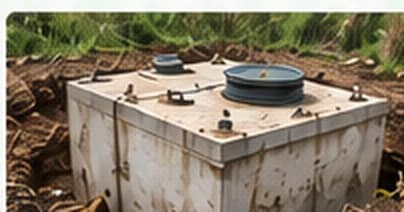
Septic Tank
Some tank issues may be limited. Others require tank replacement—without automatically requiring a new field.
Learn MoreSymptoms alone do not answer whether a septic system needs full replacement.
The useful path is: what failed, can that part be repaired, and only then—how much of the system needs to change?
Backups, odors, wet ground, or a failed inspection can feel like proof that the whole septic system is finished. Those symptoms can also come from one failed component—or from a problem that needs partial replacement rather than a complete rebuild.
Name the failed part before deciding how much of the system has to change. A backup, an odor, or a failed inspection still has to be matched to the tank, the distribution box, or the absorption area.
Different failure points open different options. Compare these categories before assuming full replacement:
A tank problem is not the same decision as a failed drain field—and neither should be assumed from one symptom alone.
Compare a repair of one component with replacement of the tank, the field, or the whole system.
Some tank issues may be limited. Others require tank replacement—without automatically requiring a new field.
Learn More
Absorption-area failure often drives a larger decision than a piping repair. Confirm field versus tank first.
Learn More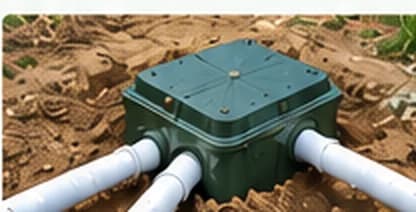
Distribution and piping problems may be repairable—or may signal broader system issues that still need evaluation.
Learn More
When several major parts have failed, or a repair cannot restore the system, full replacement is the decision to evaluate.
Learn MoreA cracked tank, a damaged distribution box, and a failed absorption area are different jobs. The failed component should be identified before the scope of work is set. A repairable tank or distribution-box problem should not be treated as full-system failure, and a failed absorption area cannot be corrected with a baffle repair.
For separating tank and field questions, see tank vs. drain-field failure. For major repair guidance, see septic system repair.
Not every septic problem requires complete replacement. The component identified as failed should match the scope of the repair or replacement. Explore septic system repair.
Repair-versus-replacement answers often collapse if tank failure and drain-field failure are mixed together. Compare tank vs. drain-field failure.
The current Suffolk grant applies when an existing cesspool or septic system is replaced with an approved I/A OWTS. A baffle or distribution-box repair is not that project. Explore septic replacement funding.
Not by themselves. Symptoms can come from the tank, the drain field, distribution components, piping, or a combination. Identifying what failed comes before deciding how much must change.
Sometimes. It depends on the failed component, the condition of the remaining parts, site conditions, design requirements, and whether a repair can restore the system. A specific property still needs an evaluation.
Partial replacement usually means renewing one major area—such as a tank or an absorption field—while other sound components remain in service, subject to evaluation and applicable approvals.
When several major components have failed, when the remaining parts cannot support a lasting repair, or when the lot and the current design rules make a limited fix unrealistic.
Start with diagnosis of what failed. Repair, partial replacement, and full replacement are different answers to different facts—not competing marketing packages.
Start with what failed—before assuming the entire system must be replaced.