
Cesspool conversion
Installing a septic system where a cesspool has been in use is a distinct local project, not a generic tank swap. Cesspool replacement.
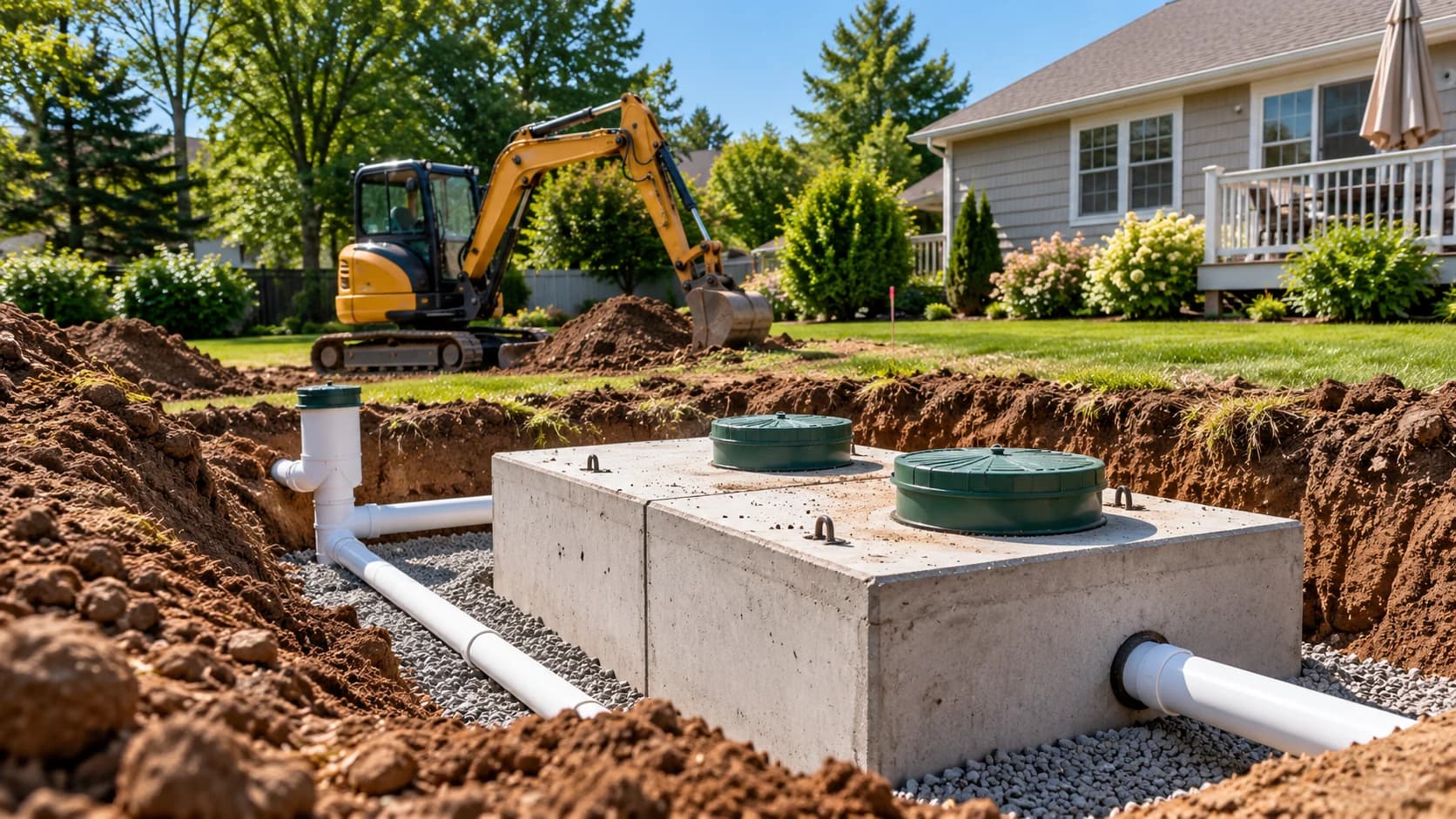
A new septic installation is a design-and-approval project, not a product you pick from a list.
Installing a tank is part of installing a system. The tank still has to work with a drain field or other dispersal method designed for the property.
Installation comes up when a house has no adequate onsite system, a cesspool has to come out of service, or a failed system cannot be repaired in place.
A tank is one component of an onsite wastewater system. A proper installation has to address wastewater flow from the building sewer, the tank, distribution, the absorption or dispersal area, site conditions, and the design and approvals that apply to that property.
Suffolk County prohibits replacing an existing cesspool in kind with another cesspool. A replacement has to meet current applicable standards. Grant-funded Suffolk installations use an approved I/A OWTS. A non-grant project does not automatically require the same technology.
Exact permits and tests depend on the property. This is the usual order of decisions, not a promise of approval.
New system, replacement, or cesspool conversion. The starting condition changes the path.
Space, setbacks, existing components, and constraints have to be looked at on the lot.
The design has to meet the requirements that apply to that property and project.
Components, including the tank when one is part of the design, go in according to the plan.
Installing a septic system where a cesspool has been in use is a distinct local project, not a generic tank swap. Cesspool replacement.
Some Suffolk County installations use I/A OWTS. Whether yours must, or may qualify for assistance, is a current-program question. I/A OWTS.
Qualifying homeowners replacing an existing cesspool or septic system with an approved I/A OWTS may currently be eligible for up to $45,000 in combined County and New York State grants. Grants and funding.
A tank is installed as part of a system that also has to distribute and disperse wastewater. Replacing only the tank leaves a failed absorption area uncorrected.
No. Requirements can depend on the property, location, project, and applicable Town and County rules, including nitrogen-related standards where they apply.
Routine pumping is ordinary septic maintenance, generally every two to three years under New York State Department of Health homeowner guidance. Installation is the construction of a new or replacement system, not a pump-out.
Share the property ZIP and what you already know about the system or cesspool. Call if you would rather talk it through.